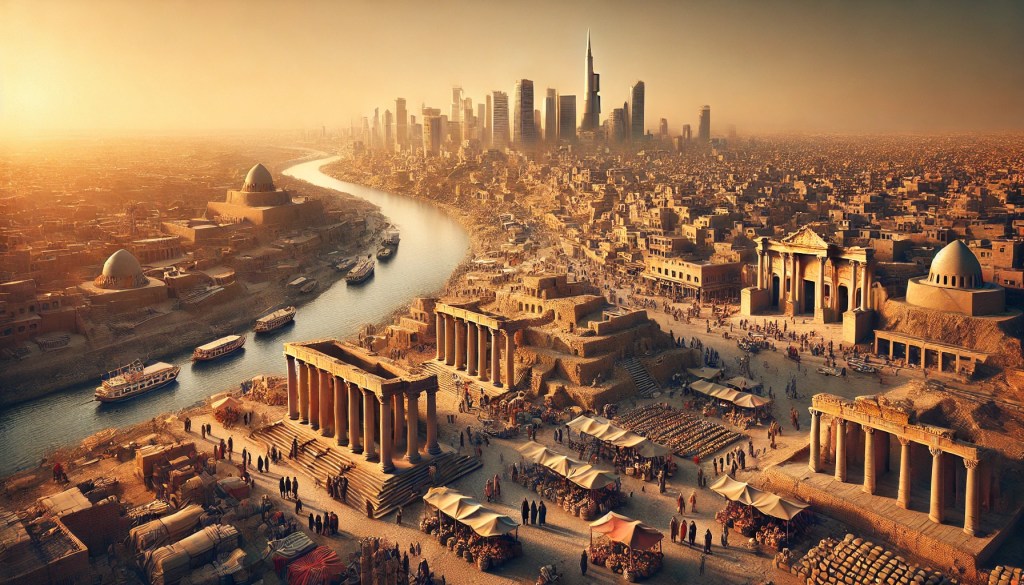
Iraq is a land of paradoxes—a nation where ancient civilizations and modern ambitions coexist, where the echoes of millennia-old empires blend with the challenges and hopes of contemporary society. Known as the “Cradle of Civilization,” Iraq has witnessed some of the most influential events in human history. In this article, we explore the country’s historical evolution through 20 key events that have defined its past, shaped its present, and offer clues about its future. The following table summarizes these events, providing dates, descriptions, and insights into their significance.
20 Most Important Events in Iraqi History
| # | Date/Period | Event | Description |
|---|---|---|---|
| 1 | c. 4500 BCE | Ubaid Period | Early agricultural communities form in southern Mesopotamia, laying the foundation for urbanization and complex society. |
| 2 | c. 3500 BCE | Uruk Period | The rise of the first cities; invention of cuneiform writing and monumental architecture that herald the dawn of civilization. |
| 3 | c. 3000 BCE | Early Dynastic Period | Formation of city-states and the emergence of kingship; administrative innovations set the stage for later empires. |
| 4 | c. 2334–2154 BCE | Akkadian Empire | Sargon of Akkad unites diverse city-states to form one of the first empires, spreading Mesopotamian culture across the region. |
| 5 | c. 2112–2004 BCE | Third Dynasty of Ur (Ur III) | Often called the Sumerian Renaissance; this period is marked by centralization, cultural flourishing, and sophisticated administrative reforms. |
| 6 | c. 1894–1595 BCE | Old Babylonian Period | The rise of Babylon under Hammurabi, who codifies one of the earliest legal systems in history, influencing jurisprudence for millennia. |
| 7 | c. 911–609 BCE | Assyrian Empire | A period of military innovation and vast territorial expansion; monumental palaces and libraries are constructed. |
| 8 | c. 626–539 BCE | Neo-Babylonian Empire | Babylon experiences a cultural and architectural revival under Nebuchadnezzar II, symbolizing the enduring legacy of Mesopotamian grandeur. |
| 9 | 539 BCE | Persian Conquest | The fall of Babylon to the Achaemenid Empire integrates Mesopotamia into a vast administrative framework, influencing subsequent cultural exchanges. |
| 10 | 331 BCE | Hellenistic Period Begins | Alexander the Great conquers Babylon, ushering in an era of Greek influence that blends with local traditions, setting the stage for a multicultural society. |
| 11 | 636 CE | Islamic Conquest | Muslim armies capture Iraq, leading to the establishment of Islamic rule and the spread of Arabic language and culture across the region. |
| 12 | 750 CE | Abbasid Caliphate Founded | Baghdad is established as the capital of the Abbasid Caliphate, becoming a center of learning, science, and culture during the Islamic Golden Age. |
| 13 | 1258 CE | Mongol Invasion of Baghdad | The devastating siege of Baghdad by the Mongols marks a significant turning point, leading to the loss of cultural and intellectual treasures. |
| 14 | 16th–17th Centuries | Ottoman Rule | Iraq becomes part of the Ottoman Empire, experiencing centuries of relative stability, yet also facing challenges in local autonomy and modernization. |
| 15 | 1920 | British Mandate and National Awakening | Following World War I, Iraq is placed under British mandate; national movements begin to emerge, paving the way for independence. |
| 16 | 1932 | Iraqi Independence | Iraq gains independence, marking the beginning of modern statehood and the challenges of building a unified nation amid diverse ethnic and religious communities. |
| 17 | 1979 | Ba’ath Party Ascendancy | The Ba’ath Party comes to power, initiating significant social, economic, and political reforms that dramatically reshape the country’s modern trajectory. |
| 18 | 2003 | U.S.-Led Invasion and Fall of Saddam Hussein | A transformative yet turbulent period; the fall of Saddam Hussein’s regime leads to a new era, marked by reconstruction, political instability, and societal change. |
| 19 | 2014–Present | Rise of ISIS and Ongoing Reconstruction | The emergence of ISIS and subsequent conflicts devastate regions of Iraq; ongoing efforts focus on rebuilding, reconciliation, and re-establishing security. |
| 20 | 2020s–Future | Path to Recovery and Transformation | A new chapter begins as Iraq embraces democratic reforms, economic diversification, and cultural revival while seeking stability and a hopeful future. |
A Narrative Through Time
Iraq’s history is a tapestry woven with triumphs and trials—a journey that spans from the humble beginnings of agricultural communities to the rise and fall of empires that have shaped not just the Middle East, but the entire world.
The Glorious Past
In ancient times, the land between the Tigris and Euphrates witnessed the birth of civilization. The Ubaid Period and the Uruk Period marked the early days of urbanization, where communities first began to organize into cities and develop writing systems. These epochs set the stage for the Early Dynastic Period, during which the concept of kingship and statehood emerged. The grandeur of the Akkadian Empire under Sargon and the sophisticated governance of the Third Dynasty of Ur are testaments to the ingenuity of early ancient Mesopotamia.
The Old Babylonian Period who built the ancient city of Babylon and the Assyrian Empire further solidified Iraq’s legacy. Hammurabi’s Code and the vast territories of Assyria illustrate a culture deeply invested in law, order, and the arts. The Neo-Babylonian Empire revived these traditions, creating architectural marvels that still captivate us today.
Transition and Transformation
The Persian and Hellenistic periods introduced new influences that enriched Iraq’s cultural landscape. With the Islamic Conquest and the founding of the Abbasid Caliphate—with Baghdad as its thriving heart—science, literature, and art flourished during the Islamic Golden Age. However, the catastrophic Mongol Invasion in 1258 CE dealt a heavy blow, marking a turning point that ushered in centuries of foreign rule, including the long-lasting influence of the Ottoman Empire.
In the 20th century, the struggle for national identity and independence came to the fore. The period under the British Mandate and subsequent independence in 1932 set the stage for modern Iraq. The ascendancy of the Ba’ath Party in 1979 and the subsequent decades of authoritarian rule have left an indelible mark on the country’s socio-political fabric.
The Modern Era and Future Prospects
The events of 2003—the U.S.-led invasion and the capture of Saddam Hussein—brought about profound change. These years were marked by turmoil, as the country grappled with the emergence of extremist groups like ISIS and the enormous challenges of reconstruction and reconciliation. Today, Iraq is in a phase of recovery, striving to balance the weight of its past with aspirations for a peaceful and prosperous future.
Looking ahead, Iraq is working on transforming its political landscape, rebuilding its economy, and reviving its cultural heritage. The path to recovery is fraught with challenges, but the resilience of the Iraqi people, their deep historical roots, and their commitment to a better future offer hope. Initiatives to promote tourism, diversify the economy, and foster dialogue among diverse communities are gradually steering Iraq toward stability and growth.
Reflection
As someone who grew up in the city of Baghdad and dedicated years to studying our ancient past, I feel a deep personal connection to these events. Each milestone—from the rise of early city-states to the modern struggles and hopes—reminds me that Iraq is more than a place marked by conflict; it is a vibrant cradle of civilization with a legacy of innovation, culture, and perseverance.
By understanding our past, we can better appreciate the challenges and opportunities that lie ahead. Iraq’s journey is ongoing, and every visitor, scholar, and local plays a part in shaping its future.
 Iraq Travel Tales