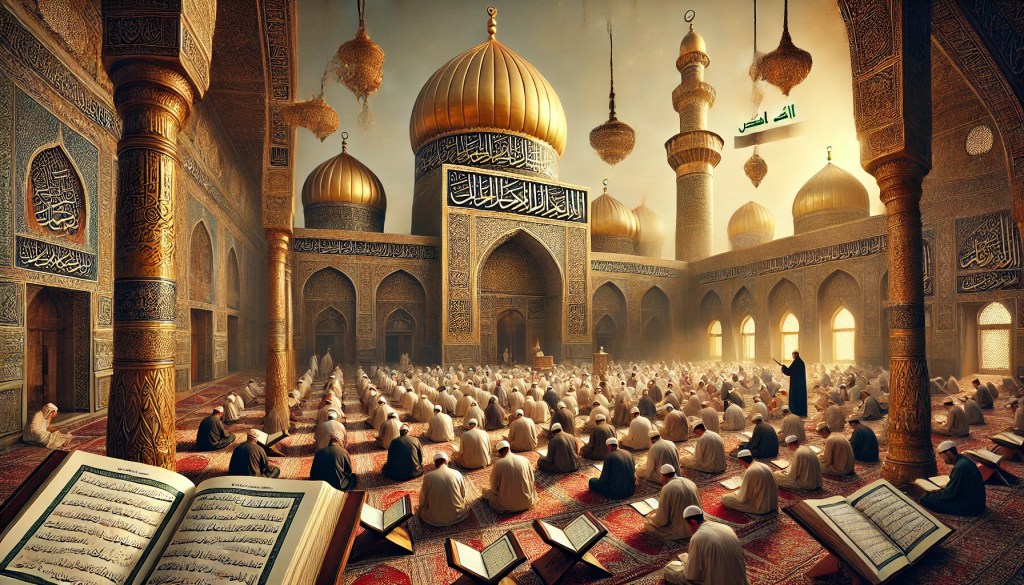
Islam has profoundly shaped Iraqi society, influencing its cultural, political, and social landscapes. The religion’s impact is evident throughout Iraq’s history, from the early Islamic conquests to contemporary times.
Early Islamic Influence in Iraq
In the 7th century CE, Islam spread into the region now known as Iraq, bringing significant cultural and societal changes. The establishment of cities like Baghdad in 762 CE transformed Iraq into a center of Islamic learning and culture. Under the Abbasid Caliphate, Baghdad became a global hub for knowledge, fostering advancements in science, philosophy, and the arts.
One of the most significant institutions of this period was the House of Wisdom, where scholars translated and preserved Greek, Persian, and Indian texts. This golden age of Islamic scholarship had a profound impact on the intellectual and scientific legacy of Iraq.
Islam in Modern Iraqi Society
Today, Islam is the official religion of Iraq, with approximately 97% of the population identifying as Muslim. The faith deeply intertwines with daily life, government policies, and politics. However, the numbers of non-Muslim minority groups, such as Christians, Yazidis, and Mandaeans, have declined dramatically due to sectarian tensions and conflict in recent decades (Cultural Atlas).
Iraq’s religious demographics are divided mainly into two sects:
- Shia Islam – the majority sect in Iraq, with key religious centers in Najaf and Karbala
- Sunni Islam – a significant minority, mainly found in Anbar, Mosul, and Tikrit
Political Dynamics and Islam in Iraq
The role of Islam in Iraqi politics has evolved significantly, especially after the fall of Saddam Hussein’s regime in 2003. The removal of a secular government led to the rise of Islamist parties, filling the power vacuum and influencing constitutional and legal frameworks.
Iraq’s 2005 Constitution establishes Islam as the foundation of the legal system, declaring that no law can be passed that contradicts Islamic principles. This has led to debates over the balance between religious influence and secular governance.
Key Moments and Challenges
- 2003 U.S.-Led Invasion – Overthrew Saddam Hussein, leading to the rise of religious political factions and sectarian violence.
- 2005 Iraqi Constitution – Declared Iraq an Islamic, democratic state, increasing religious influence in governance.
- 2014-2017 ISIS Occupation – The terrorist group ISIS imposed an extreme interpretation of Islamic law during its control of Iraqi cities like Mosul and Raqqa.
- Recent Legal Debates – Proposed amendments to Iraq’s Personal Status Law have sparked controversy, particularly regarding women’s rights and child marriage.
Studying the Impact of Islam on Iraqi Society Today
To gain a deeper understanding of Islam’s role in Iraq, consider these resources:
- Academic Research – Books and articles on Islam in Iraq, such as those found on JSTOR and the International Review of the Red Cross, provide valuable insights.
- Government Reports – The U.S. Department of State’s 2022 Report on International Religious Freedom examines religious rights and freedoms in Iraq.
- News Outlets – Reputable sources like Al Jazeera and AP News provide updates on Islamic law reforms and religious affairs in Iraq.
 Iraq Travel Tales