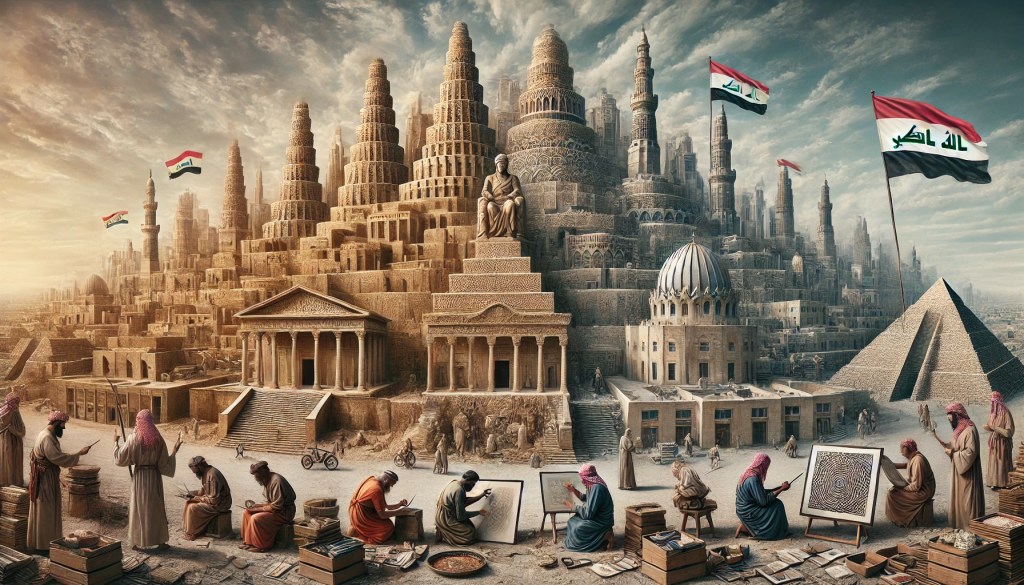
Iraq’s art and architecture have evolved over millennia, reflecting the region’s rich history, diverse cultures, and socio-political changes. From ancient Mesopotamian innovations to contemporary artistic expressions, Iraqi art and architecture offer a profound narrative of human civilization.
Ancient Beginnings: Mesopotamian Art and Architecture
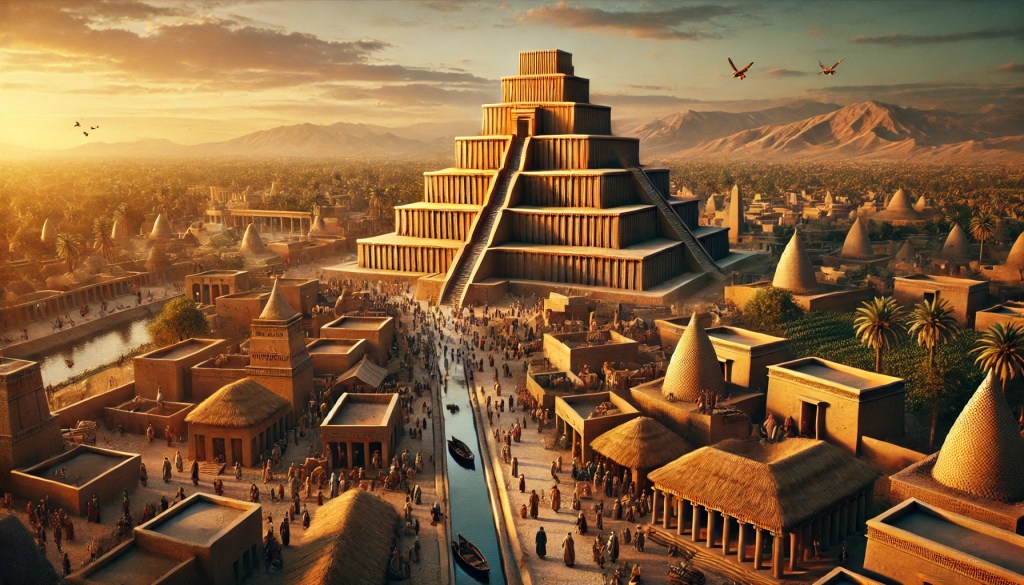
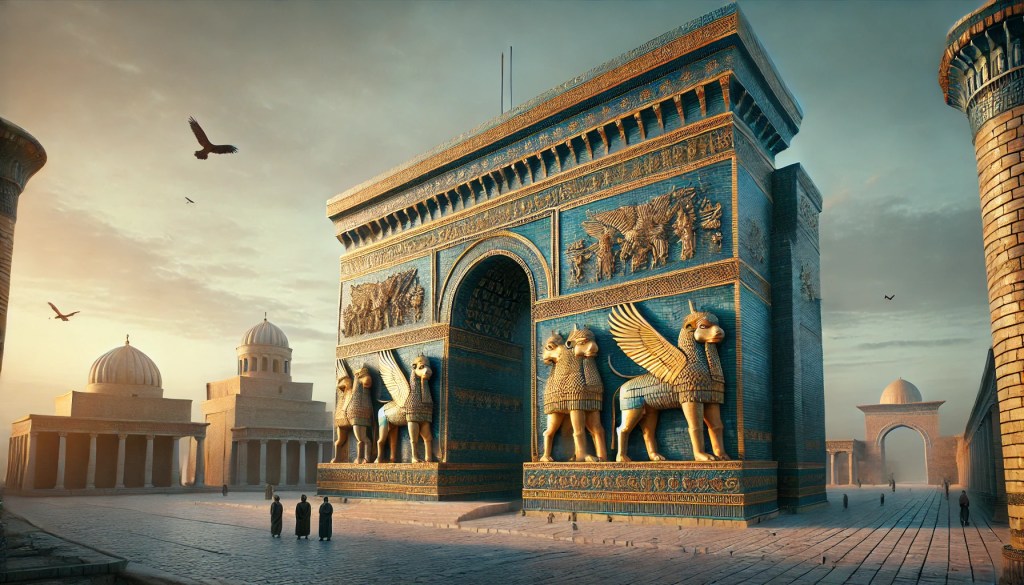
Often termed the “Cradle of Civilization,” ancient Mesopotamia, located in present-day Iraq, witnessed the emergence of some of the earliest known art and architectural forms. The Sumerians, Akkadians, Babylonians, and Assyrians contributed significantly to early artistic endeavors. Ziggurats, massive terraced structures, exemplify the architectural ingenuity of these civilizations. Intricate bas-reliefs and cylinder seals from this era depict religious rituals, mythological scenes, and daily life, showcasing advanced craftsmanship.
Islamic Influence: The Flourishing of Art and Architecture
With the advent of Islam in the 7th century, Iraqi art and architecture underwent a transformation. The Abbasid Caliphate, with Baghdad as its capital, became a center for Islamic art, science, and culture. Architectural marvels like the Great Mosque of Samarra, with its iconic spiral minaret, and the use of intricate arabesque patterns and calligraphy in design, highlight this period’s contributions.
Modern Era: Synthesis of Tradition and Innovation
The 20th century introduced new dynamics as Iraqi artists and architects grappled with modernity while honoring their heritage. Pioneers like Rifat Chadirji sought to blend international styles with traditional Iraqi elements, a concept he termed “international regionalism.” This approach aimed to create a national architectural identity that resonated with Iraq’s historical context.
In the visual arts, the establishment of institutions such as the Institute of Fine Arts in 1940-41 and the Iraqi Artists’ Society in 1956 fostered artistic growth. Artists began exploring themes that reflected their cultural identity, moving away from purely academic European styles. The Monument to Freedom (Nasb al-Hurriyah) in Baghdad, designed by Jawad Saleem in 1959, stands as a testament to this era’s artistic aspirations.
Contemporary Challenges and Resilience
The late 20th and early 21st centuries brought significant challenges. Conflicts led to the looting of museums and the destruction of cultural heritage sites. Notably, during the 2003 invasion, approximately 8,500 artworks were stolen or vandalized, severely impacting Iraq’s cultural repositories. Efforts to recover and restore these pieces have been ongoing, with some successes.
Despite adversity, Iraqi artists have continued to create, often in exile. The global diaspora has led to the establishment of galleries and exhibitions worldwide, showcasing Iraqi art and ensuring its continued evolution. Innovative artists have adapted to material shortages by incorporating found objects into their work, reflecting resilience and adaptability.
Studying and Appreciating Iraqi Art and Architecture Today
For those interested in delving deeper into Iraqi art and architecture:
- Academic Institutions: Universities and museums worldwide offer courses and collections dedicated to Middle Eastern art, providing insights into Iraq’s artistic heritage.
- Online Archives: Digital platforms host extensive archives of Iraqi artworks, architectural designs, and scholarly articles, making them accessible to a global audience.
- Exhibitions and Galleries: Numerous galleries, especially in cultural hubs, feature exhibitions of Iraqi art, both historical and contemporary, offering a tangible connection to the country’s creative output.
For a visual exploration of Iraq’s architectural heritage, you might find this video insightful:

 Iraq Travel Tales