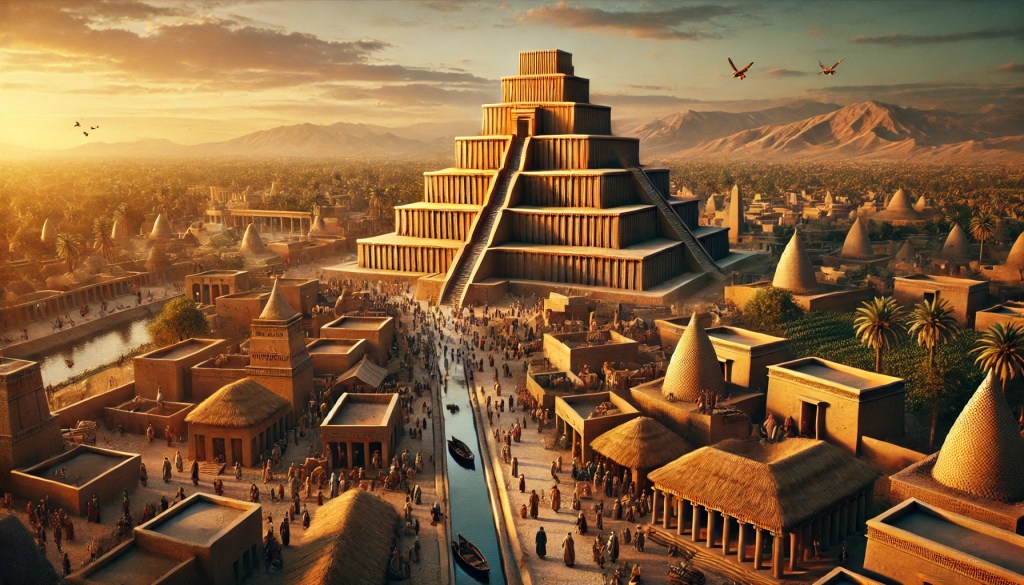
Hi! I’m Layla! As someone who studied Cultural Anthropology in Baghdad, my fascination with ancient Mesopotamia has been a lifelong passion. This land—often heralded as the cradle of civilization—holds stories that not only shaped the modern world but continue to inspire and challenge us today. In my academic journey and personal travels, I have discovered that the ancient Mesopotamian legacy is far more than dusty ruins; it is a vibrant tapestry of human innovation, culture, and resilience.
The Birthplace of Civilization
Ancient Mesopotamia, nestled between the Tigris and Euphrates rivers, was home to some of the earliest human civilizations. The Sumerians, Akkadians, Babylonians, and Assyrians not only invented writing and developed complex urban centers but also laid the foundations for law, literature, and social organization. I recall my first visit to the ruins of Babylon, where the towering remains of the Ishtar Gate stirred my imagination. Standing there, I couldn’t help but wonder how such a magnificent structure had witnessed the ebb and flow of empires and the evolution of human thought.
Below is a 10-point timeline of Ancient Mesopotamia presented in a table. This timeline highlights key periods and events that shaped the cradle of civilization:
| # | Date (Approx.) | Event | Description |
|---|---|---|---|
| 1 | c. 4500 BCE | Ubaid Period | The emergence of early agricultural settlements and village life in southern Mesopotamia, laying the foundation for urban development. |
| 2 | c. 3500 BCE | Uruk Period | The rise of the first cities, the development of monumental architecture, and the invention of cuneiform writing, marking the dawn of urban culture. |
| 3 | c. 3000 BCE | Early Dynastic Period | Formation of independent city-states and the establishment of kingship, with increased complexity in administration and social organization. |
| 4 | c. 2334–2154 BCE | Akkadian Empire | Sargon of Akkad unites various city-states to form one of the world’s first empires, spreading Mesopotamian culture across the region. |
| 5 | c. 2112–2004 BCE | Third Dynasty of Ur (Ur III) | Often called the Sumerian Renaissance, this period is noted for its centralized governance, cultural achievements, and extensive administrative reforms. |
| 6 | c. 1894–1595 BCE | Old Babylonian Period | The rise of Babylon under Hammurabi, who established one of the earliest and most influential legal codes in history. |
| 7 | c. 911–609 BCE | Assyrian Empire | A period marked by military innovation, vast territorial expansion, and the construction of monumental palaces and temples. |
| 8 | c. 626–539 BCE | Neo-Babylonian Empire | Babylon experiences a cultural and architectural revival under Nebuchadnezzar II, highlighted by impressive construction projects such as the Hanging Gardens (if they existed). |
| 9 | c. 539 BCE | Persian Conquest | The fall of Babylon to the Achaemenid Empire integrates Mesopotamia into a vast new political framework, influencing administration and culture. |
| 10 | c. 331 BCE | Hellenistic Period Begins | Alexander the Great conquers Babylon, ushering in Greek influence over Mesopotamia and marking the transition to a new era of cultural fusion. |
This timeline provides a concise overview of the pivotal moments in Ancient Mesopotamia, reflecting the enduring legacy of a civilization that laid the groundwork for modern society.
Personal Insights from My Studies
During my time at the University of Baghdad, I immersed myself in the study of ancient Mesopotamian societies. I vividly remember long afternoons in the library poring over cuneiform tablets and scholarly texts that detailed the achievements of our ancestors. These academic endeavors not only enriched my understanding of history but also instilled in me a profound respect for the innovations of the past. I learned that many of our modern practices—be it in law, literature, or architecture—can trace their roots back to these ancient societies.
One of my favorite memories is a field trip to the Great Ziggurat of Ur. As I ascended its ancient steps, I felt a powerful connection to the generations that had come before me. The ziggurat, with its layered structure and meticulously crafted bricks, was a testament to the ingenuity and devotion of its builders. It was a moment of reflection, where academic knowledge merged seamlessly with personal experience, illuminating the enduring legacy of Mesopotamian civilization.
Favorite Sites and Hidden Gems
Beyond the well-known sites like Babylon and Ur, I have discovered several lesser-known treasures that offer unique insights into ancient Mesopotamia. The ruins of Nimrud, for example, exude an aura of mystery and resilience. Walking among its broken columns and eroded bas-reliefs, I was struck by the palpable sense of history—each fragment whispering secrets of a once-glorious era.
Another place that captured my heart is the ancient city of Nineveh. Despite the challenges it has faced over the centuries, Nineveh stands as a symbol of survival and renewal. My visits there have always left me with a deep appreciation for the enduring human spirit and the relentless drive to rebuild and preserve culture.
Lessons from the Past for the Present
The study of ancient Mesopotamia is not just an academic pursuit; it offers timeless lessons about innovation, adaptation, and the power of human creativity. The Mesopotamians pioneered irrigation systems, created one of the first forms of writing, and established legal codes that still influence us today. Their legacy reminds us that progress is a cumulative journey—one that is built on the achievements of those who came before us.
For me, these ancient achievements serve as a source of inspiration. They encourage me to look at the challenges of today through the lens of historical resilience and ingenuity. As I continue to explore both the ancient sites and the modern urban landscapes of Iraq, I am constantly reminded that our present is intricately woven with the threads of the past.
Conclusion
Ancient Mesopotamia is a realm of endless discovery—a place where every stone has a story and every ruin is a chapter in the epic of human civilization. My studies and travels have shown me that understanding this ancient heritage is key to appreciating not only our historical roots but also the cultural dynamics that continue to shape modern Iraq.
I invite you to join me on this journey of exploration and reflection. Whether you’re a fellow history enthusiast or a curious traveler, I hope that the legacy of ancient Mesopotamia will inspire you as much as it has inspired me. After all, the stories of our ancestors are not just tales of the past—they are the foundation of our present and the beacon for our future.
 Iraq Travel Tales