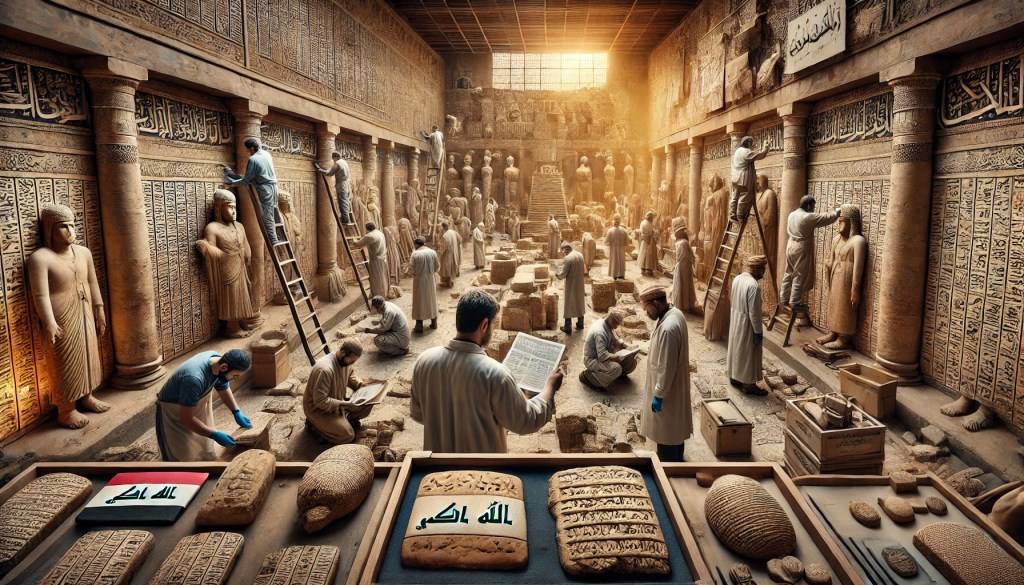
Iraq, often referred to as the cradle of civilization, boasts a rich cultural heritage spanning thousands of years. From the ancient Sumerians and Babylonians to the Abbasid Caliphate, Iraq has been home to some of the world’s most significant historical sites. However, modern conflicts, looting, and neglect have placed this heritage at risk. Today, local and international efforts are working to restore and safeguard Iraq’s cultural legacy.
Challenges to Iraq’s Cultural Heritage
One of the most devastating blows to Iraq’s heritage was the looting of the Iraq Museum in Baghdad following the 2003 U.S. invasion. Over 15,000 artifacts, including priceless Mesopotamian relics, were stolen, with many still missing today. The museum, which houses treasures from Babylon, Ur, and Nineveh, has since reopened, but the damage remains significant.
During the rise of the Islamic State (ISIS) between 2014 and 2017, many of Iraq’s most cherished historical landmarks were deliberately destroyed. The ancient city of Nimrud, the Great Mosque of al-Nuri, and the UNESCO World Heritage site of Hatra were among the many sites targeted.
ISIS also engaged in the illegal trafficking of antiquities, selling looted artifacts on the black market to fund their activities. According to UNESCO, this systematic destruction of Iraq’s historical legacy was not just an attack on artifacts but on the identity and history of the Iraqi people.
Key Restoration and Preservation Efforts
1. Reconstruction of Mosul’s Historic Landmarks
After the liberation of Mosul from ISIS in 2017, significant efforts have been made to restore its destroyed landmarks. The reconstruction of the Great Mosque of al-Nuri is being led by UNESCO’s “Revive the Spirit of Mosul” initiative, in partnership with the UAE and Iraqi authorities.
2. Digital Preservation Initiatives
To counteract the physical destruction of heritage, organizations like Rekrei (formerly Project Mosul) have been using crowdsourced photographs to create 3D models of destroyed artifacts, ensuring they are preserved digitally for future generations.
3. Protection of Iraq’s Manuscripts and Libraries
The Iraqi National Library and Archives, which suffered significant damage during the 2003 war, has been working with The British Library to digitize rare manuscripts and historical texts.
4. International Collaborations
Organizations such as the Smithsonian Institution and The Iraq Cultural Heritage Initiative have partnered with Iraqi archaeologists to support the recovery and protection of Iraq’s endangered heritage sites.
5. Crackdown on Illegal Antiquities Trade
The Iraqi government, INTERPOL, and UNESCO have been working together to recover stolen artifacts. In 2021, the U.S. returned 17,000 looted artifacts, including one of the world’s oldest literary works, the Epic of Gilgamesh Tablet.
Timeline of Key Events in Iraq’s Cultural Heritage Preservation
- 2003 – Looting of the Iraq Museum during the U.S. invasion.
- 2014-2017 – ISIS destroys numerous cultural sites, including Nimrud, Hatra, and Mosul’s historic mosques.
- 2015 – Launch of Rekrei (Project Mosul) for digital preservation of lost artifacts.
- 2017 – UNESCO’s “Revive the Spirit of Mosul” initiative begins.
- 2021 – 17,000 looted Iraqi artifacts returned by the U.S., including the Epic of Gilgamesh Tablet.
- 2023-Present – Ongoing restoration projects in Mosul, Hatra, and Babylon.
How to Study and Support Iraq’s Cultural Heritage Today
For those interested in learning more and supporting preservation efforts, here are some essential resources:
- Academic Research & Online Courses
- JSTOR and The British Museum have extensive studies on Mesopotamian history and Iraq’s endangered heritage.
- Coursera offers courses on Middle Eastern archaeology and cultural preservation.
- Museums & Cultural Institutions
- The Iraq Museum in Baghdad, now partially reopened, houses some of Mesopotamia’s greatest treasures.
- The Louvre Museum in Paris has a dedicated section for Iraqi and Mesopotamian artifacts.
- News & Reports on Preservation Efforts
- Al Jazeera and BBC frequently cover restoration projects in Iraq.
- The United States Institute of Peace provides reports on Iraq’s cultural heritage and its role in rebuilding the country.
- Support Preservation Organizations
- Donate to UNESCO’s Iraq Heritage Fund, which funds restoration projects.
- Volunteer or support initiatives by The World Monuments Fund, which helps protect endangered sites.

 Iraq Travel Tales